Original Chinese-Language Author: Li Man (李满)
(Translated by Adrian Chan-Wyles PhD)
(Translated by Adrian Chan-Wyles PhD)
Author: Li Man (李满)
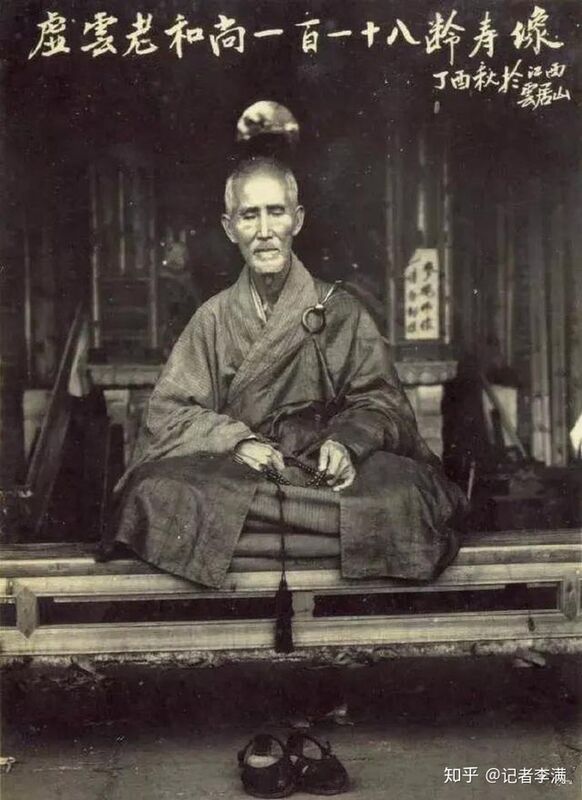
From 1840 to 1959 marked the 120-years that Master Xu Yun - the Great Master of Ch’an - lived in the world! Among the modern masters, the longevity of the Old Ch’an Master Xu Yun has always been considered the most outstanding existence in the world. This is because he lived a long time, and is the only monk to have lived through the reigns of Five Emperors and Four Dynasties. During ancient times, the longevity of practitioners in China was not uncommon, but such a longevity as exhibited by Master Xu Yun is rare in the modern world. Master Xu Yun, who broke the world's usual concept of life-expectancy, seemed to indicate the inevitability of his own longevity in his attitude towards life and death. When Master Xu Yun was 117-years-old, he left a Last Will and Testament that no one could not understand at the time. In this Will he said:
"After I die, assist the process of putting a yellow robe upon my dead body and place it in a coffin. Then a day later, move the coffin to the foot of the mountain - West of the cowshed – where it is to be cremated. After the cremation - mix my ashes with sugar, flour, and oil, knead the mixture into nine balls - and then throw each ball mindfully into the river, so that the creatures living in the water are provided with a good meal."
As Master Xu Yun was so famous and greatly respected, there were many people who "requested that the ashes be scattered into the rivers and seas after cremation" acting in accordance with his Will. They respectfully asked for the ashes to be kneaded into flour, oil, and sugar into ball so that the fish could be fed. Despite following his wishes, his request puzzled a number of people as Master Xu Yun followed the Vinaya Discipline strictly and never ate meat of any kind. Why would he ask the fish to eat his remains without them knowing? The answer is that when human-bodies are buried – creatures feed on the decaying flesh during the natural processes of decomposition (despite the investment in all types of expensive coffins designed to ‘stop’ or ‘delay’ this process). Master Xu Yun wanted to provide the fish with food to prolong their lives – as fish are usually not required to follow the Vinaya Discipline and are free to eat anything they can find as food. Although cremated in the Buddhist tradition, Master Xu Yun did not want to deprive the fish of a good meal!
"After I die, assist the process of putting a yellow robe upon my dead body and place it in a coffin. Then a day later, move the coffin to the foot of the mountain - West of the cowshed – where it is to be cremated. After the cremation - mix my ashes with sugar, flour, and oil, knead the mixture into nine balls - and then throw each ball mindfully into the river, so that the creatures living in the water are provided with a good meal."
As Master Xu Yun was so famous and greatly respected, there were many people who "requested that the ashes be scattered into the rivers and seas after cremation" acting in accordance with his Will. They respectfully asked for the ashes to be kneaded into flour, oil, and sugar into ball so that the fish could be fed. Despite following his wishes, his request puzzled a number of people as Master Xu Yun followed the Vinaya Discipline strictly and never ate meat of any kind. Why would he ask the fish to eat his remains without them knowing? The answer is that when human-bodies are buried – creatures feed on the decaying flesh during the natural processes of decomposition (despite the investment in all types of expensive coffins designed to ‘stop’ or ‘delay’ this process). Master Xu Yun wanted to provide the fish with food to prolong their lives – as fish are usually not required to follow the Vinaya Discipline and are free to eat anything they can find as food. Although cremated in the Buddhist tradition, Master Xu Yun did not want to deprive the fish of a good meal!
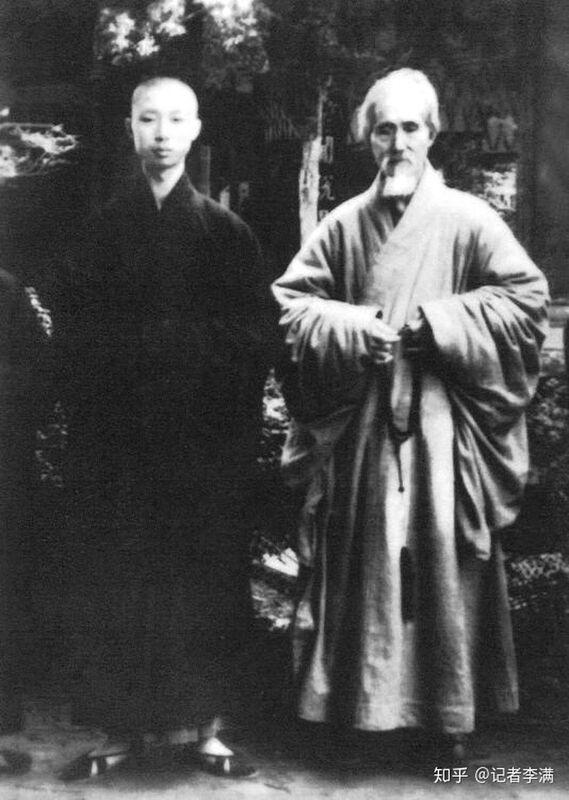
At noon (on 12th day of the ninth month of the lunar calendar) in 1959, Master Xu Yun ascended into the divine-sky riding on back of crane as it flew Westward! One day after his death, his disciples cremated his bones and according to his instructions the ashes were crushed into fine powder, and oil, sugar, flour and flour were used to make pellets which were thrown into the Yangtze River. After Master Xu Yun’s ash-pellets were thrown into the river - the fish and shrimps came in groups, and within a short while, Master Xu Yun’s ashes became a delicacy that nourished and prolonged life. I don't know how the disciples of Xu Yun felt when they witnessed this situation. As ordinary people, they will sigh and sigh. Master Xu Yun’s way of saying goodbye to the physical existence, and his indifferent attitude towards his own flesh, really surprised the world! In fact, Master Xu Yun’s move is an indirect demonstration: In his eyes, his ashes are just an insignificant image in the mortal world. His calm and detached attitude towards his own flesh contained great wisdom for life: life and death were just a trivial matter that couldn't be more ordinary. This kind of indifferent attitude towards life and death - Master Xu Yun possessed when he was 61-years-old. At that time, during the time of the Gengzi Boxing Uprising, the Boxers rioted in all counties in Shandong against Western oppression. Master Xu Yun was heading towards Wutai yet again. On the way, he met a foreign soldier who was accustomed to killing innocent Chinese people. This foreign soldier pointed a gun at him and asked in bad Chinese: "Are you afraid of death?" When Master Xu Yun first saw this, he stood (inwardly quiet) and outwardly ‘still’ - offering no response. After a short time, he calmly said: “I am indifferent to life and death. If I must die by your hand – then so be it. Please proceed.” Seeing Master Xu Yun’s serene expression, the foreign soldier was unnerved and started to panic. After a stalemate for a few seconds, the foreign Soldier said: "You can go!" When later generations heard of this story, they were amazed. Master Xu Yun was able to escape this disaster because of his indifference to life and death. Those who can live freely and easily in the world are mostly those who are not attached to death and life. Xu Yun’s longevity probably has a great association with his calm attitude towards death. It is said that when the body of Master Xu Yun was cremated, more than a hundred colourful relics were found amongst the ashes. These relics - like his ashes that fed the fishes and shrimp - have now been placed in various locations considered to be of great spiritual significance. Master Xu Yun’s use of ashes to nourish the lives of others also reflects the concepts of "cherishing good luck" and "benefiting others" which he upheld throughout his life.
Master Xu Yun believes that there are two kinds of blessings for human beings, one is cultivated in the previous life, and the other is accumulated in this life. Master Xu Yun advocated thrift throughout his life, which is also a manifestation of his cherishing the generation of good karma.. Master Xu Yun once said:
"The blessings of a person in this life are pre-determined by inherent causes developed in previous lives. You must not just 'enjoy your blessings' in this life without ‘cultivating’ further blessings for the future through virtuous actions."
It is worth noting that “enjoying your blessings" as mentioned by Master Xu Yun here, also includes the meaning of "benefit". He advocated that people should not only cherish the blessings of this life, but also do more good deeds to accumulate merit, commonly known as "benefit" or ‘good karma’. "The blessings experienced in this life are fixed in past lives." This concept of blessings in Master Xu Yun includes "how much food to eat in this life and how much clothes to wear" and so on. This is also the source of Master Xu Yun’s advocacy of frugality throughout his life. He believes that food and possessions, etc. As used in one's life are the consequences of good causes laid in previous lives, so only by practicing frugality can one's life be rewarded in the long-run. In this case, the comparison with "eating" is a little bit blunter: How much food you eat in this life is earned in your previous life, and when this amount is reached, your present life will come to an end. This is probably the reason why Buddhist monks always practice thrift. Whether in the mortal realm, in the monastery or wandering around, Master Xu Yun was always very frugal. Like most spiritual monks, he has always insisted on not eating after lunch. On weekdays, Master Xu Yun’s food has always been simple and plain. Master Xu Yun’s personal assistant, Master Shao Yun (绍云), once said (when recalling the years, he spent with the eminent monk):
"The blessings of a person in this life are pre-determined by inherent causes developed in previous lives. You must not just 'enjoy your blessings' in this life without ‘cultivating’ further blessings for the future through virtuous actions."
It is worth noting that “enjoying your blessings" as mentioned by Master Xu Yun here, also includes the meaning of "benefit". He advocated that people should not only cherish the blessings of this life, but also do more good deeds to accumulate merit, commonly known as "benefit" or ‘good karma’. "The blessings experienced in this life are fixed in past lives." This concept of blessings in Master Xu Yun includes "how much food to eat in this life and how much clothes to wear" and so on. This is also the source of Master Xu Yun’s advocacy of frugality throughout his life. He believes that food and possessions, etc. As used in one's life are the consequences of good causes laid in previous lives, so only by practicing frugality can one's life be rewarded in the long-run. In this case, the comparison with "eating" is a little bit blunter: How much food you eat in this life is earned in your previous life, and when this amount is reached, your present life will come to an end. This is probably the reason why Buddhist monks always practice thrift. Whether in the mortal realm, in the monastery or wandering around, Master Xu Yun was always very frugal. Like most spiritual monks, he has always insisted on not eating after lunch. On weekdays, Master Xu Yun’s food has always been simple and plain. Master Xu Yun’s personal assistant, Master Shao Yun (绍云), once said (when recalling the years, he spent with the eminent monk):
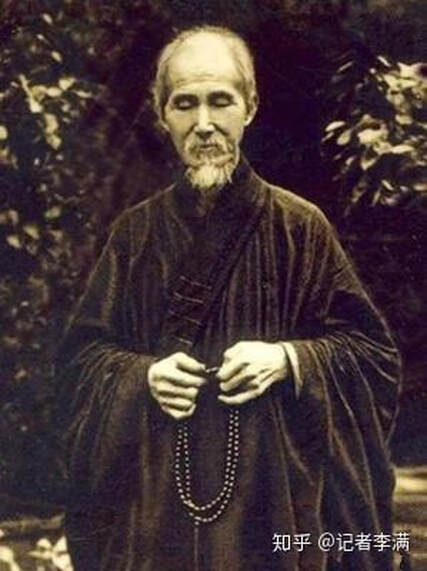
"The porridge and vegetables that the old monk (Xu Yun) ate were all made by us. They are the same as those eaten by the ordinary monks. If there are no guests, he would never add another dish."
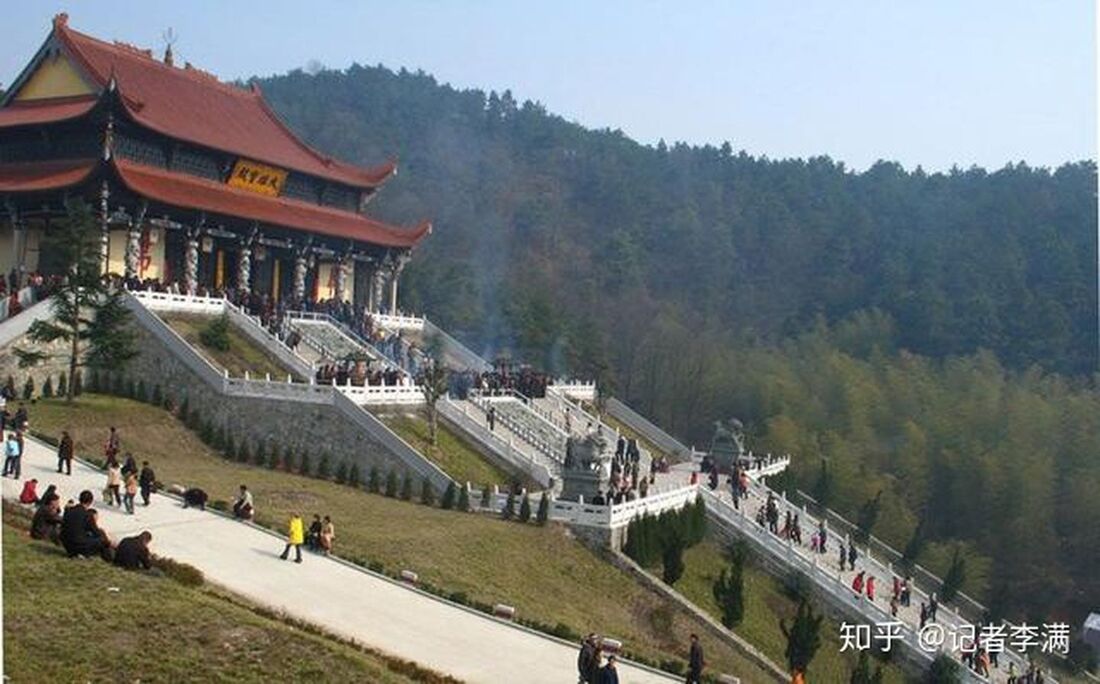
The porridge in Master Shao Yun’s mouth is the food cooked with a little bit of rice mixed with a lot of sweet potatoes, and the dishes here, are sweet potato leaves and branches fried with salt. And more often, their food is just sweet potatoes. It is hard to imagine that this was the meal of the 117-year-old Master Xu Yun when he was at the Yunju Shan monastery in Jiangxi. Master Shao Yun also recounted a past event that made him profoundly remember. Master Shao Yun said that Yunju Mountain was very high at the time, with an altitude of more than 1,100 meters. Because of the severe winter weather, the sweet potatoes hidden in the cellar were basically black when they were taken out for consumption, and it was very bitter to cook them....
At the Yunju Mountain Zhenru Zen Temple Sweet potato is still bitter, sweet potato skin is even more unpalatable. Therefore, Master Shao Yun and Master Qi Xian (齐贤) picked out the bitter and astringent sweet potato skins and placed them on the side of the table. After they finished eating, Master Xu Yun picked up the sweet potato skins and ate them without making a sound. Later, the young Master Shao Yun asked the old monk incomprehensibly:
"You are so old venerable, and those sweet potato skins are so bitter! How can you still eat it?"
After listening, Master Xu Yun only half-opened his eyes and slowly said,
"This is food! You can only eat it, not waste it."
Normally, no matter where Master Xu Yun eats, he will pick it up and eat what he sees someone spilling rice grains, even if the rice grains have been scattered on the ground. Once, Master Xu Yun also had a meal with the leaders of the Religious Department at that time, and the leaders were very uncomfortable saying:
"Old monk, the rice has fallen on the ground and is soiled, so we can't eat it."
But Master Xu Yun only calmly said: "It doesn't matter! These are all grains, and not one can be wasted." Master Xu Yun treated the grains the same way he treated the clothes he wore. According to the memories of people who have had contact with Master Xu Yun - no matter whether spring, summer, autumn or winter - he always only wore a rotten jacket, that is, a long gown that is patched up. In winter, he added a cotton coat to it, and in summer he wore only a single gown. Once, the straw mat on which Master Xu Yun slept was broken. Master Shao Yun saw that eventually the mat had been broken several times and the hole was too big, so he proposed:
"Let's take the mat to our permanent residence and change it for a new one."
At that time, a straw mat was only two yuan, but Master Xu Yun became angry after hearing this, and he yelled:
"What a blessing! I want to enjoy this mat – it's almost new!"
In the end, no one could allow this any longer and carried-out secret repairs when Master Xu Yun was outside. In life, the frugal Master Xu Yun often taught his disciples:
"You must be disciplined when cultivating wisdom, so that cultivating good fortune is better than wasting good fortune."
He once warned his disciples and said:
"If you waste all your blessings and enjoy the rewards; you will become a person without blessings. It’s as if you made money from business in the past, and you put it in the bank. If you no longer work hard to make money, and just enjoy it, the bank’s savings will all soon be spent, so if you go on, you will be in debt."
The porridge in Master Shao Yun’s mouth is the food cooked with a little bit of rice mixed with a lot of sweet potatoes, and the dishes here, are sweet potato leaves and branches fried with salt. And more often, their food is just sweet potatoes. It is hard to imagine that this was the meal of the 117-year-old Master Xu Yun when he was at the Yunju Shan monastery in Jiangxi. Master Shao Yun also recounted a past event that made him profoundly remember. Master Shao Yun said that Yunju Mountain was very high at the time, with an altitude of more than 1,100 meters. Because of the severe winter weather, the sweet potatoes hidden in the cellar were basically black when they were taken out for consumption, and it was very bitter to cook them....
At the Yunju Mountain Zhenru Zen Temple Sweet potato is still bitter, sweet potato skin is even more unpalatable. Therefore, Master Shao Yun and Master Qi Xian (齐贤) picked out the bitter and astringent sweet potato skins and placed them on the side of the table. After they finished eating, Master Xu Yun picked up the sweet potato skins and ate them without making a sound. Later, the young Master Shao Yun asked the old monk incomprehensibly:
"You are so old venerable, and those sweet potato skins are so bitter! How can you still eat it?"
After listening, Master Xu Yun only half-opened his eyes and slowly said,
"This is food! You can only eat it, not waste it."
Normally, no matter where Master Xu Yun eats, he will pick it up and eat what he sees someone spilling rice grains, even if the rice grains have been scattered on the ground. Once, Master Xu Yun also had a meal with the leaders of the Religious Department at that time, and the leaders were very uncomfortable saying:
"Old monk, the rice has fallen on the ground and is soiled, so we can't eat it."
But Master Xu Yun only calmly said: "It doesn't matter! These are all grains, and not one can be wasted." Master Xu Yun treated the grains the same way he treated the clothes he wore. According to the memories of people who have had contact with Master Xu Yun - no matter whether spring, summer, autumn or winter - he always only wore a rotten jacket, that is, a long gown that is patched up. In winter, he added a cotton coat to it, and in summer he wore only a single gown. Once, the straw mat on which Master Xu Yun slept was broken. Master Shao Yun saw that eventually the mat had been broken several times and the hole was too big, so he proposed:
"Let's take the mat to our permanent residence and change it for a new one."
At that time, a straw mat was only two yuan, but Master Xu Yun became angry after hearing this, and he yelled:
"What a blessing! I want to enjoy this mat – it's almost new!"
In the end, no one could allow this any longer and carried-out secret repairs when Master Xu Yun was outside. In life, the frugal Master Xu Yun often taught his disciples:
"You must be disciplined when cultivating wisdom, so that cultivating good fortune is better than wasting good fortune."
He once warned his disciples and said:
"If you waste all your blessings and enjoy the rewards; you will become a person without blessings. It’s as if you made money from business in the past, and you put it in the bank. If you no longer work hard to make money, and just enjoy it, the bank’s savings will all soon be spent, so if you go on, you will be in debt."
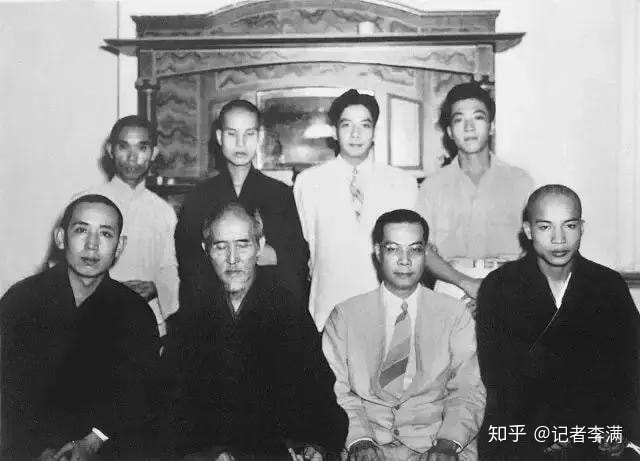
In the eyes of Master Xu Yun, only by constantly cultivating good roots and benefiting others, the blessings can continue. This is why the human life span is also a kind of blessing. Xu Yun believes that if a person is "produce enough merit" enough in this life, he is likely to live longer than his destined life. If mortals lead an excessive and self-indulgent life, then they will use-up all their positive karma very quickly and this will shorten their life-expectancy! Quite often, a lack of food or even continuous illness is often a sign that all the good karma has been exhausted. As well as respecting good fortune and working to benefit others, Master Xu Yun also emphasised the continuous carrying-out of good deeds! Master Xu Yun continued to perform goods deeds as a major facet of Ch’an training! Master Xu Yun not only practiced Ch’an Buddhism, but also continued to rebuild all the Buddhist temples that had fallen into disrepair! Furthermore, Master Xu Yun also trained countless numbers of monastics and lay-practitioners in the correct practice of Ch’an Buddhism! Among his disciples are the Buddhist monks ‘Yi Cheng’ (一诚) and ‘Chuan Yin’ (传印) - two great and virtuous Buddhist monks who both served as the ‘President’ of the Buddhist Association of China!
In 1913, the second year of the Republic of China, Master Xu Yun personally came forward to prevent a possible war. At that time, some princes and living Buddhas in Tibet were influenced by the British and Indian governments - and refused to recognize the government of the Republic of China. Against this historical background, Yuan Shikai (袁世凯) secretly ordered the governor of Yunnan - Cai E (蔡锷) - to send troops to Tibet. In order to avoid being overwhelmed, Cai E had to ask Master Xu Yub for help. After receiving Cai E's request for help, Master Xu Yun ventured into the Tibetan area, and then he invited the respected Toho Karmapa of Tibet. Under the lobbying of His Holiness Toho, the living Buddha in Tibet finally recognized the government of the Republic of China, and a war was averted. Master Xu Yun said that the good karmic roots he had already planted in the past allowed him to influence the situation as he did. If he had not followed the Vinaya Discipline properly in this life (and before) - thousands of people would have surely lost their lives!
In 1913, the second year of the Republic of China, Master Xu Yun personally came forward to prevent a possible war. At that time, some princes and living Buddhas in Tibet were influenced by the British and Indian governments - and refused to recognize the government of the Republic of China. Against this historical background, Yuan Shikai (袁世凯) secretly ordered the governor of Yunnan - Cai E (蔡锷) - to send troops to Tibet. In order to avoid being overwhelmed, Cai E had to ask Master Xu Yub for help. After receiving Cai E's request for help, Master Xu Yun ventured into the Tibetan area, and then he invited the respected Toho Karmapa of Tibet. Under the lobbying of His Holiness Toho, the living Buddha in Tibet finally recognized the government of the Republic of China, and a war was averted. Master Xu Yun said that the good karmic roots he had already planted in the past allowed him to influence the situation as he did. If he had not followed the Vinaya Discipline properly in this life (and before) - thousands of people would have surely lost their lives!
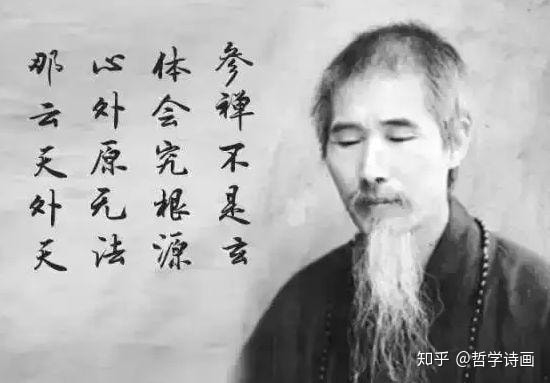
At the age of 120, Master Xu Yun's body became weaker and weaker due to a serious illness. His disciple urged him to see a doctor, but he said calmly:
"It's okay, my causal connection with this world is about to break."
On the day he left the world, Xu Yun thanked his disciples for working with him to rebuild the monastery. After that, he told his disciples:
“Uphold the Vinaya Discipline, practice the correct concentration, and use wisdom to eliminate greed, hatred, and delusion.”
After a pause, he gave his last words in this life just as he was leaving the world:
"Cultivate right thinking and mindfulness so that you can have a fearless spirit when facing everyone and everything in the entire world. If you are tired, please go back and rest!"
After speaking, he put his hands together to say goodbye to everyone. When the disciples returned an hour after they left, Master Xu Yun had passed away safely.
Posted on 2019-08-20
"It's okay, my causal connection with this world is about to break."
On the day he left the world, Xu Yun thanked his disciples for working with him to rebuild the monastery. After that, he told his disciples:
“Uphold the Vinaya Discipline, practice the correct concentration, and use wisdom to eliminate greed, hatred, and delusion.”
After a pause, he gave his last words in this life just as he was leaving the world:
"Cultivate right thinking and mindfulness so that you can have a fearless spirit when facing everyone and everything in the entire world. If you are tired, please go back and rest!"
After speaking, he put his hands together to say goodbye to everyone. When the disciples returned an hour after they left, Master Xu Yun had passed away safely.
Posted on 2019-08-20
 RSS Feed