Progressive Supplementary Statement 10.02.2024
I N T E R N A T I O N A L C H ‘ A N B U D D H I S M I N S T I T U T E
YEAR OF THE WOOD DRAGON
YEAR OF THE WOOD DRAGON
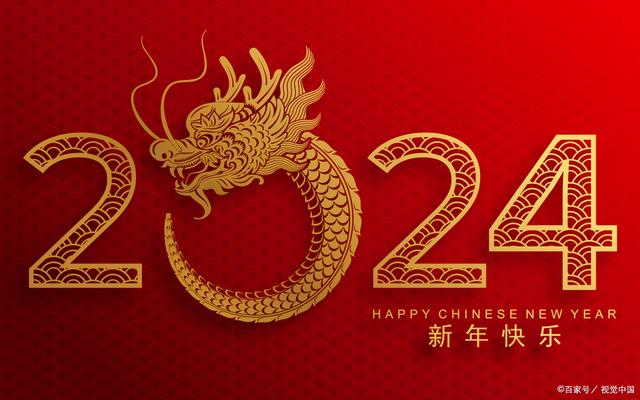
This is the Year of the 'Green' (Wood) Dragon!
Wishes All its Members & Supporters
A Very Happy Chinese New Year 2024 (4722)
(中国农历新年快乐 – 4722)
A Very Happy Chinese New Year 2024 (4722)
(中国农历新年快乐 – 4722)
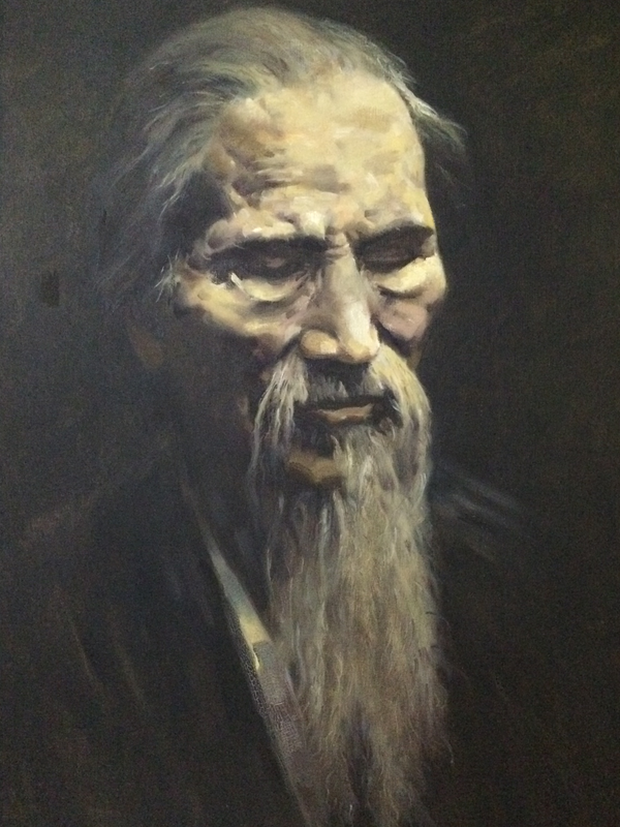
Master Xu Yun - Truly An 'Ancient' Immortal!
An interesting fact is that Master Xu Yun (1840-1959) lived through the following ten cycles of the ‘Year of the Dragon’:
1) 1844 (green – wood)
2) 1856 (red – fire)
3) 1868 (yellow – earth)
4) 1880 (white – metal)
5) 1892 (black - water)
6) 1904 (green - wood)
7) 1916 (red - fire)
8) 1928 (yellow - earth)
9) 1940 (white - metal)
10) 1952 (black - water)
2) 1856 (red – fire)
3) 1868 (yellow – earth)
4) 1880 (white – metal)
5) 1892 (black - water)
6) 1904 (green - wood)
7) 1916 (red - fire)
8) 1928 (yellow - earth)
9) 1940 (white - metal)
10) 1952 (black - water)
Chinese Culture is Full of 'Transformative' Doorways!
From this analysis, it can be ascertained that Master Xu Yun lived through ‘two’ complete cycles of the Chinese Zodiac – as each ‘animal’ repeats itself five-times to form one complete cycle of 60-years. As Master Xu Yun was in his 120th year – he had lived through two-cycles of the Chines Zodiac - despite not quite reaching his exact 120th birthday according to Western calculations. There is a problem, however, in that traditional Chinese dating often ascribes the age of ‘1-year’ to a new-born baby - as the child has spent around a year in the woman’s body. Furthermore, when a person passes away – it is a traditional habit (out of respect) - to ‘add’ a further ‘1-year’ to the age of the deceased. (This means that Chinese people subjected to this traditional dating-system are always ‘2-years’ older than when their age is worked-out using the modern Western-method).
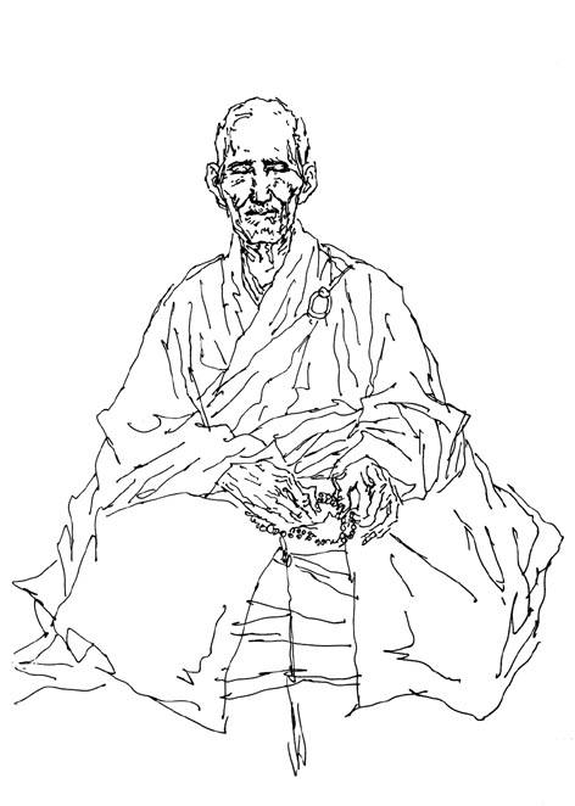
Images of Master Xu Yun Are Still Being Produced Throughout China!
Interestingly, this is not the case regarding Master Xu Yun - either in the Chinese-language Ch’an Records or the corresponding English translations and transliterations. I suspect this is because Master Xu Yun rejected the world (and all its conventions) - only following the (Buddhist) Vinaya Discipline. For instance, all texts state that Xu Yun was 119-years old at the time of his death – whilst simultaneously making sure the reader understands that he was also well within his 120th year. Furthermore, all texts state that he possessed the ‘Dharma-Age’ of 101-years old – as this is the length of time he was ordained as a Buddhist monastic and therefore upheld the Vinaya Discipline. If the two-extra years had been added to his already long life – then Master Xu Yun would have been 121-years old when he dropped his body – whilst being in his 122nd-year.
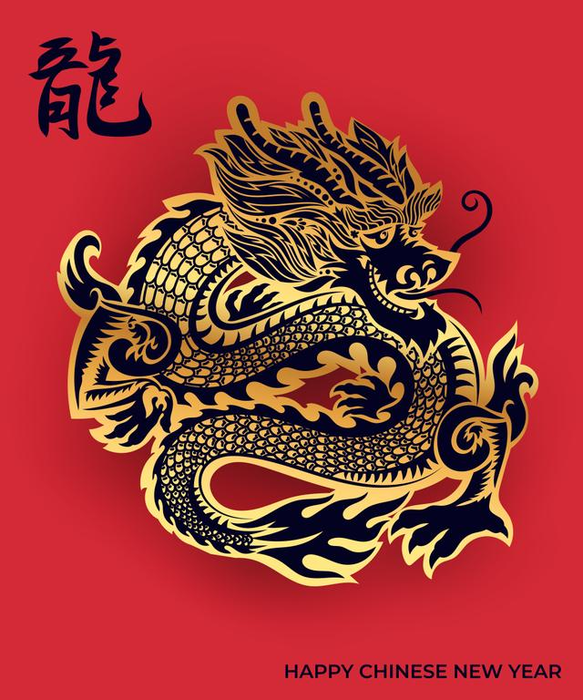
The 'Dragon' Appears in All Types of Chinese Self-Cultivation!
As can be seen, the ‘Five Phases’ (五行 – Wu Xing) repeat continuously – as do the associated ‘colours’. It is believed that the special treatment of the number ‘5’ arises from the five planets (not including the Sun, Moon, or Earth) that can be seen with the naked eye and which first appear within Chinese-language sources via the ‘Document Classic’ (書經 – Shu Jing) – also referred to as the ‘Book of History’ - due to the nature of its content – which is attributed to Confucius [551-479 BCE] (and his descendants). The ‘Five Phases’ are generally referred to as originating in the ‘Pre-Qin Dynasty’ (221-206 BCE) period within the Chinese-language literature – and therefore probably date to around the 3rd century BCE. If Confucius did pen the original ‘Shujing’ text – then it logically follows that the scholars of a later generation added (or included) the ‘Five Phase’ ideology as a commentarial means to clarify the text. Whatever the case, the point to bear in mind is that the ‘Five Phases’ also represent the five common objects that the ordinary people make regular use of on a daily basis – if humanity is to survive. The associated ‘colour’ is a logical extension that is supportive of each ‘Phase’. Each ‘Phase’, of course, represents a (temporary) congealment of ‘Qi’ (氣) – a substance that is forever flowing between the broad-earth and the divine-sky – and which also traverses through the human body – maintaining good health when this ‘flow’ is unhindered.
Mr Wang Ping (王平)
Secretary - ICBI (Beijing Office)
Secretary - ICBI (Beijing Office)
-----------------------------------------------------------------------------------------------------------------------
Progressive Supplementary Statement 22.01.2023
I N T E R N A T I O N A L C H ‘ A N B U D D H I S M I N S T I T U T E
YEAR OF THE WATER RABBIT
YEAR OF THE WATER RABBIT
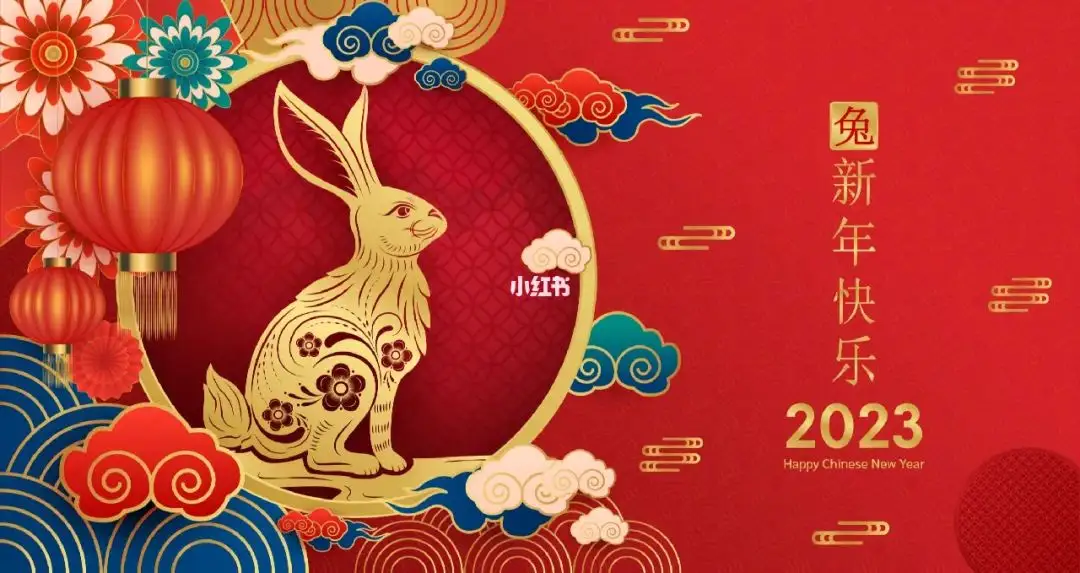 In China It Is the Year of the Rabbit - Whilst in Vietnam It Is the Cat! Perhaps the Two Can Be Friends!
Wishes All its Members & Supporters
A Very Happy Chinese New Year 2023 (4721)
(中国农历新年快乐 – 4721)
A Very Happy Chinese New Year 2023 (4721)
(中国农历新年快乐 – 4721)
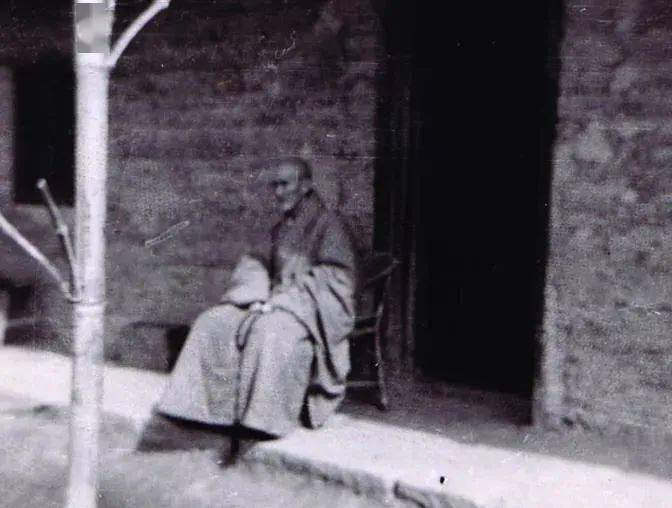
Master Xu Yun Would Often Shave Off His Head and Beard at Chinese New Year Time!
There is a story (told to children within Chinese culture) that states that when the Buddha was meditating in the forest attempting to realise Enlightenment, all the animals voluntarily became ‘silent’ to assist him in this quest! After achieving full Enlightenment, the Buddha called all the animals to him so that he could reward them for their consideration and selfless action. The Buddha decided that from that moment onwards, each animal would have its specific characteristic engrain and imbued into the very essence of lunar year, so that any human-being born in that year would automatically share in those characteristics as part of their broader individual identity. To achieve this, the Buddha decided that twelve animals would represent a year each – with five repetitions of each animal (equally ‘60-years’) denoting one complete (lunar) cycle! All the animals turned-up on time to see the Buddha – except the ‘cat’ which possesses a far too independent character! As all the years had been allocated by this time, the Buddha decided that the ‘cat’ would share a year with the ‘rabbit’ on the grounds that both animals, although distinct in many ways, nevertheless share some similar characteristics!
 Today, China Tends to Prefer the 'Rabbit' whilst Vietnam Stresses the 'Cat'!
This is why in China (and throughout the world) many people born in this year of the Chinese zodiac describe themselves as being both a ‘rabbit’ and/or a ‘cat’! Of course, although this story links the founding of the Chinese lunar cycle with the ‘Indian’ Buddha – there is no direct evidence that says it is true (although in China the older date of the Buddha living around 1000 BCE is still followed – and perhaps oneday a Pali or Sanskrit text may be discovered recording this incident). The zodiac tradition in China appears to have developed from practical the need of Kings and Emperors to accurately set the calendar for farming purposes (correctly predicting the ‘light’ and ‘dark’ element of each day during specific times of the year) so that the planting, growing and harvesting of crops was both timely and bountiful throughout the country and that the population was adequately fed! Indeed, the competence of the ruling house often depended upon setting the calendar correctly and effectively making defensive or offensive war with their neighbours!
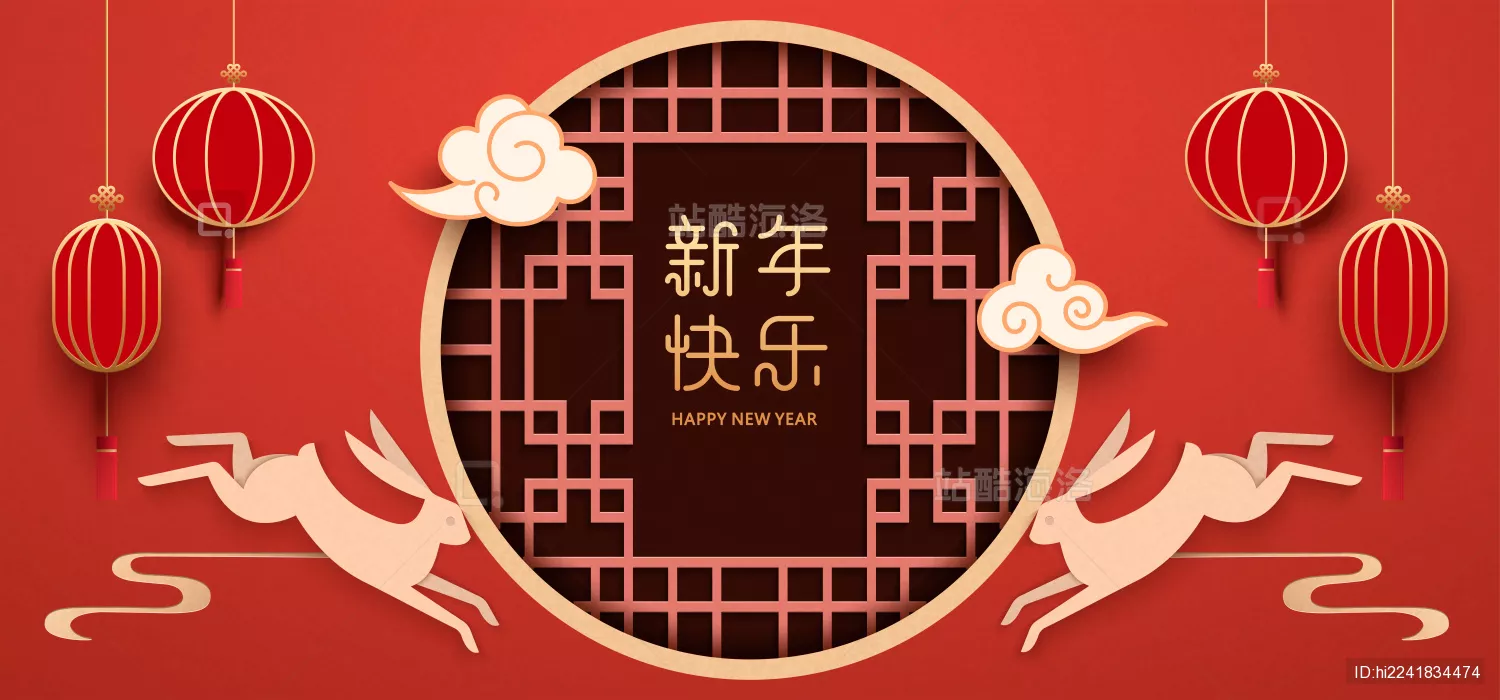
The Rabbit Will Be Blessed In This Year!
Within Chinese culture, the Spring Festival marks the beginning of the ‘new’ lunar year – with Chinese New Year falling on the first day of Spring! On this occasion (2023) - the ‘Year of the (Water) Rabbit’ falls on January 22nd in the Western (solar) calendar! The year of the ‘Rabbit’ is often considered unpredictable and troublesome within Chinese cultural thinking – but also representative of longevity, peace, and prosperity (perhaps due to the influence of the ‘cat’)! Good fortune seems to be implied through the agency of being ‘cautious’ and ‘careful’, etc. When studying these subjects, it is best to remember that these are superstitious components of human culture and to remember that according to the Ch’an doctrine, although the cause and effect of karma may well be in operation, nevertheless, how we perceive and manifest within this material world very much depends upon whether we have penetrated the empty mind and seen clearly the underlying ‘emptiness’ of ALL physical phenomenon! Master Xu Yun (1840-1959) would often shave his head and cut-off his long beard at this time of year as it marks ‘renewal’ within Chinese culture! This represents the practice of renewing the ‘hua tou’ every single second until the job is done!
Mr Wang Ping (王平)
Secretary - ICBI (Beijing Office)
Mr Wang Ping (王平)
Secretary - ICBI (Beijing Office)
-----------------------------------------------------------------------------------------------------------------------
Progressive Supplementary Statement 1.02.2022
I N T E R N A T I O N A L C H ‘ A N B U D D H I S M I N S T I T U T E
YEAR OF THE BLACK WATER TIGER
YEAR OF THE BLACK WATER TIGER
Wishes All its Members & Supporters
A Very Happy Chinese New Year 2022 (4720)
(中国农历新年快乐 – 4720)
A Very Happy Chinese New Year 2022 (4720)
(中国农历新年快乐 – 4720)
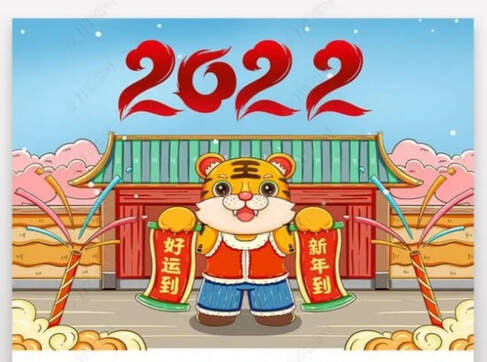
Compiled by Mr Wang Ping - ICBI Beijing Office
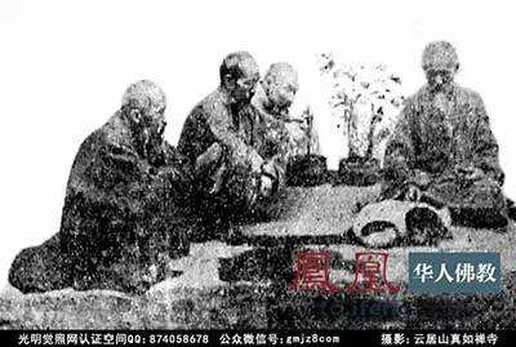
OLD VENERABLE CHAN MASTER XU YUN [虚云老和尚] (1840-1959)
OLD VENERABLE CHAN MASTER XU YUN [虚云老和尚] (1840-1959)
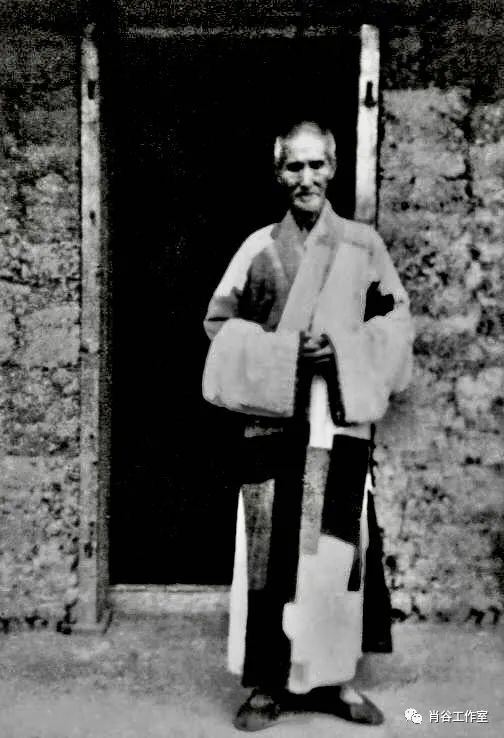
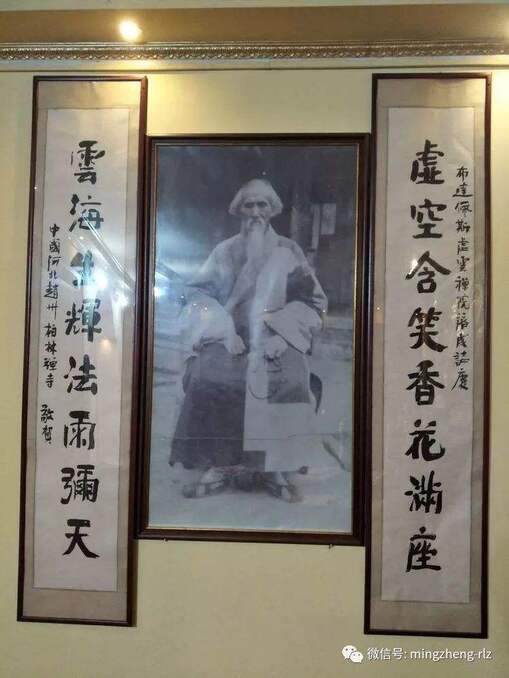
The Book of Change (Yijing) talks of s superior person possessing the ability to ‘change’ like a tiger! The tiger is the 3rd animal in the cycle of the Chinese zodiac and has a huge significance in traditions and folklore. Considered the ‘king of beasts’ in Chinese culture, it is said that the written character for king – ‘王’ (Wang) – originates from the pattern observed on the tiger’s head - and is also a popular surname. (The symbol ‘王’ is also said to consist of the ‘gua’ or ‘trigram’ representing the ‘divine-sky’ with a vertical line running down through its middle. This indicates a ‘great person’ who possesses the ability to ‘unite’ the ‘divine-sky’ [or top line] with ‘humanity [middle line] and ‘earth’ [bottom line]). The tiger symbolises power, strength and bravery, whilst also being seen to represent majesty and righteousness. Consequently, people born in the Year of the Tiger are thought to possess many of these traits. This is why the ‘tiger’ and a ‘great being’ (like a ‘sage’ or ‘immortal’) are considered synonymous throughout ancient Chinese culture. Of course, all great Ch’an masters possess this ability as ‘changing like a tiger’ is a key ingredient in freeing the mind from its deluded habits of thought and quite literally ‘shocking’ the aspirant into directly perceiving the empty mind ground which underlies all reality! A tiger also possesses ‘patience’ and the ability to ‘sit-back’ and keep a careful eye upon events. Controlling and transforming reality takes more than just aggression and power – as these things only work if commanded by a sure and stable wisdom!
Blessings and Good Fortune to Each and Every One of You!
Mr Wang Ping (王平)
Secretary - ICBI (Beijing Office)
Blessings and Good Fortune to Each and Every One of You!
Mr Wang Ping (王平)
Secretary - ICBI (Beijing Office)
-----------------------------------------------------------------------------------------------------------------------
Progressive Supplementary Statement 12.02.2021
I N T E R N A T I O N A L C H ‘ A N B U D D H I S M I N S T I T U T E
YEAR OF THE METAL OX
YEAR OF THE METAL OX
Wishes All its Members & Supporters
A Very Happy Chinese New Year 2021 (4719)
(中国农历新年快乐 – 4719)
A Very Happy Chinese New Year 2021 (4719)
(中国农历新年快乐 – 4719)
Compiled by Mr Wang Ping - ICBI Beijing Office
OLD VENERABLE CHAN MASTER XU YUN [虚云老和尚] (1840-1959)
OLD VENERABLE CHAN MASTER XU YUN [虚云老和尚] (1840-1959)
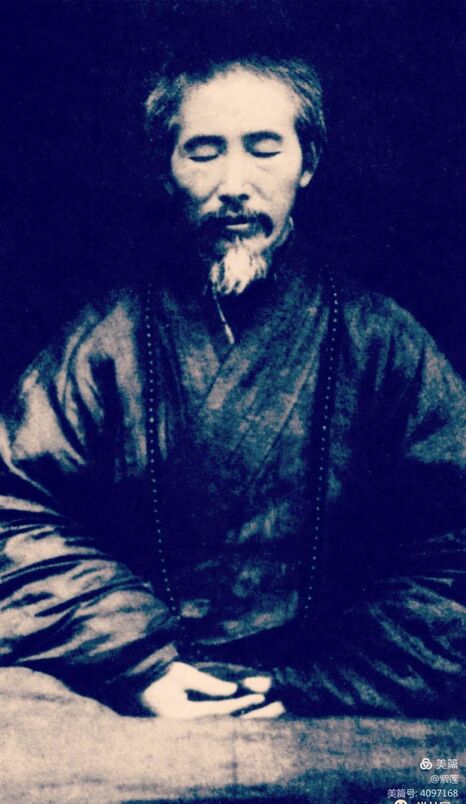
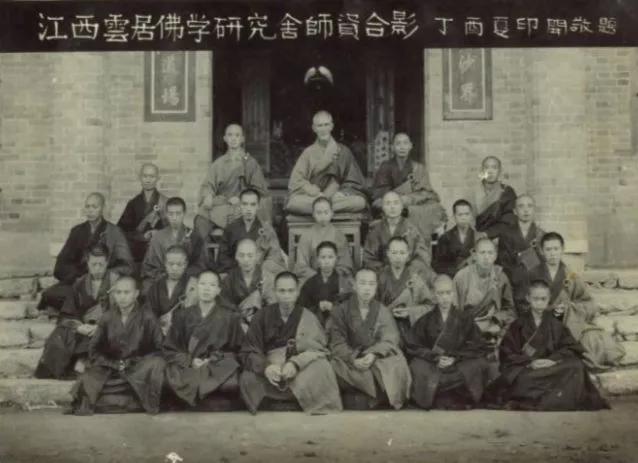
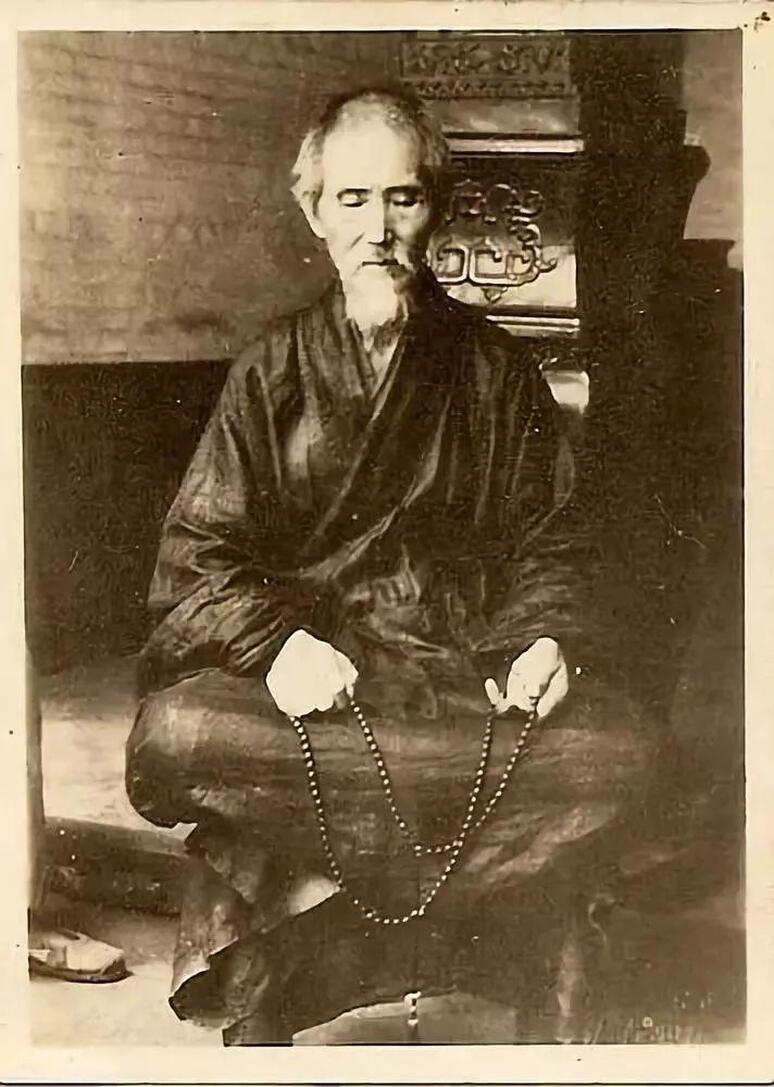
Finding the ‘essence’ of existence is a difficult task that has to be pursued with the utmost seriousness! Life has the potential for great suffering – as the Buddha states. Of course, life is comprised of ‘good’, ‘neutral’ and ‘bad’ experiences that move across the senses as karmic-conditions dictate. If we can realise the empty mind ground, then a great deal of this past karma (accumulated over eons) will be wiped-out in an instant! This is the School of ‘Dhyana’ - or ‘Meditation’. It is the School of using the mind to overcome the mind – and realise the true-nature of material reality. All matter is ‘empty’ - and all emptiness is ‘full’ - this is the central message of the Heart Sutra! Study these pictures of Old Master Xu Yun as he steadfastly ‘looks within’. This is the method preserved in China as the ‘Ch’an School’.
The history of the world is full of cycles of plenty and deficiency, of pleasure followed by pain! This is how nature operates. Times can be ‘good’ for a long time – and suddenly things can degrade into situations of terrible suffering and confusion! The Covid19 pandemic is one of these times across the entire world! When times get hard, we should all use these situations to strengthen our grips upon the hua tou and look within with a greater and more determined diligence! After-all, what else is there for us to do? We have no choice than to apply our methods with a greater determination than ever shown before! Even if you are ‘afraid’ - this ‘fear’ is a ‘feeling’ that emanates from the empty mind ground and manifests through one or more of the six senses. When we know this, it is a relatively easy matter to ‘return’ this ‘negative’ feeling to its ‘non-feeling’ origin and quite literally ‘rescue’ ourselves from our own suffering!
Master Xu Yun transcended his physical body on October 12-13 – 1959. His casual karma had come to a complete end – and there were no more rebirths for him – not even as a Bodhisattva! Over the long eons, the spiritual essence that manifested as ‘Xu Yun’ had achieved all the compassionate rebirths that were required to rescue the multitude of beings residing in the Ten Directions! We must all sit with the determination of an Iron Ox! I like to spend this time of year with you all through a few lines of encouragement. I am a very old man now – but I never forget you all!
Blessings and Good Fortune to Each and Every One of You!
Mr Wang Ping (王平)
Secretary - ICBI (Beijing Office)
The history of the world is full of cycles of plenty and deficiency, of pleasure followed by pain! This is how nature operates. Times can be ‘good’ for a long time – and suddenly things can degrade into situations of terrible suffering and confusion! The Covid19 pandemic is one of these times across the entire world! When times get hard, we should all use these situations to strengthen our grips upon the hua tou and look within with a greater and more determined diligence! After-all, what else is there for us to do? We have no choice than to apply our methods with a greater determination than ever shown before! Even if you are ‘afraid’ - this ‘fear’ is a ‘feeling’ that emanates from the empty mind ground and manifests through one or more of the six senses. When we know this, it is a relatively easy matter to ‘return’ this ‘negative’ feeling to its ‘non-feeling’ origin and quite literally ‘rescue’ ourselves from our own suffering!
Master Xu Yun transcended his physical body on October 12-13 – 1959. His casual karma had come to a complete end – and there were no more rebirths for him – not even as a Bodhisattva! Over the long eons, the spiritual essence that manifested as ‘Xu Yun’ had achieved all the compassionate rebirths that were required to rescue the multitude of beings residing in the Ten Directions! We must all sit with the determination of an Iron Ox! I like to spend this time of year with you all through a few lines of encouragement. I am a very old man now – but I never forget you all!
Blessings and Good Fortune to Each and Every One of You!
Mr Wang Ping (王平)
Secretary - ICBI (Beijing Office)
Progressive Supplementary Statement 25.01.2020
I N T E R N A T I O N A L C H ‘ A N B U D D H I S M I N S T I T U T E
YEAR OF THE YANG RAT
YEAR OF THE YANG RAT
Wishes All its Members & Supporters
A Very Happy Chinese New Year 2020 (4718)
(中国农历新年快乐 – 4718)
Compiled by Mr Wang Ping - ICBI Beijing Office
OLD VENERABLE CHAN MASTER XU YUN [虚云老和尚] (1840-1959)
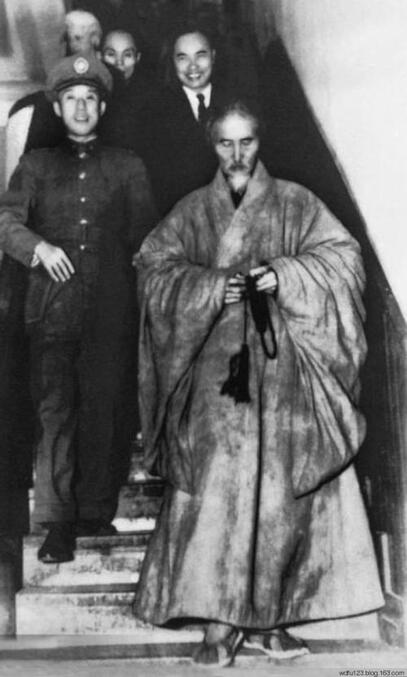
The physical world has a life of its own which appears in Buddhist thought as ‘natural’ karma. This is different from – but related to - ‘volitional’ karma where our thoughts effect the environment through the quality of our chosen behaviours. Typically, the Lord Buddha explains this as appearing within the three categories of ‘pleasant’, ‘painful’ and ‘neutral’. Obviously, pleasant and neutral behaviours are preferred to those which generate pain and suffering to ourselves and others. Painful – or suffering inducing – behaviours emerge from the fabric of the unenlightened mind which is imbued with the effluence (or ‘asava’) of the three taints, namely greed, hatred and delusion. The Ch’an School does not disagree with any of this, but it does emphasis ‘penetrating’ straight into the heart of the empty mind ground, free of any doubt or distraction! By directly experiencing how all perception arises from the empty mind ground, all of the six senses are automatically ‘returned’ to their non-perceiving essence. The use of language by a well-directed mind is the key, which is the origin of the Ch’an Dialogue:
A monk asked: “What is the most profound teaching you offer?”
Master Cui Yan (Yong Ming) called to his Attendant and ordered: “Boil some water so that we may brew some tea!”
The method of the Ch’an Dialogue existed in the Buddha’s time, but became emphasised in China within the ‘Meditation School’. The ancient spiritual culture of India is immense and we in China owe this body of thought a great debt. The ancient Indian Yogis (including the Lord Buddha) all explored the possibility of attaining complete psychological and physical freedom so that the practitioner could lose their personal ego, whilst moving freely and unhindered in the ten directions! Indian scholars and Yogis transmitted this teaching to China where it now exists in the various forms of Chinese Buddhism. The question is ‘how do we move freely’ in the ten directions? Master Xu Yun (1840-1959) was adamant that all spiritual freedom emerges from the strictest of psychological and physical discipline and self-control. This is why he persuaded the Government of China to integrate the Vinaya Discipline into the body of China’s National Law in the early 1950s – making it a Criminal Offence for an ordained Buddhist monk not to properly uphold the Buddha’s monastic discipline. Master Xu Yun used this development to wipe-out corruption from within the Buddhist Sangha in China.
Cen Xue Lu: “The world is changing fast, where should I go to maintain my practice?
Master Xu Yun: “To a student of the Dao, his home is everywhere and if you only lay down everything, the place where you are is a Bodhimandala – a place where you can realise the truth – please set your mind at rest.”
Return ALL thoughts and feelings to their empty mind ground origination - through the use of Vinaya Discipline, the Gong-an and Hua-tou! What else is there to do?
Blessings and Good Fortune to Each and Every One of You!
Mr Wang Ping (王平)
Secretary - ICBI (Beijing Office)
A monk asked: “What is the most profound teaching you offer?”
Master Cui Yan (Yong Ming) called to his Attendant and ordered: “Boil some water so that we may brew some tea!”
The method of the Ch’an Dialogue existed in the Buddha’s time, but became emphasised in China within the ‘Meditation School’. The ancient spiritual culture of India is immense and we in China owe this body of thought a great debt. The ancient Indian Yogis (including the Lord Buddha) all explored the possibility of attaining complete psychological and physical freedom so that the practitioner could lose their personal ego, whilst moving freely and unhindered in the ten directions! Indian scholars and Yogis transmitted this teaching to China where it now exists in the various forms of Chinese Buddhism. The question is ‘how do we move freely’ in the ten directions? Master Xu Yun (1840-1959) was adamant that all spiritual freedom emerges from the strictest of psychological and physical discipline and self-control. This is why he persuaded the Government of China to integrate the Vinaya Discipline into the body of China’s National Law in the early 1950s – making it a Criminal Offence for an ordained Buddhist monk not to properly uphold the Buddha’s monastic discipline. Master Xu Yun used this development to wipe-out corruption from within the Buddhist Sangha in China.
Cen Xue Lu: “The world is changing fast, where should I go to maintain my practice?
Master Xu Yun: “To a student of the Dao, his home is everywhere and if you only lay down everything, the place where you are is a Bodhimandala – a place where you can realise the truth – please set your mind at rest.”
Return ALL thoughts and feelings to their empty mind ground origination - through the use of Vinaya Discipline, the Gong-an and Hua-tou! What else is there to do?
Blessings and Good Fortune to Each and Every One of You!
Mr Wang Ping (王平)
Secretary - ICBI (Beijing Office)
Progressive Supplementary Statement 05.02.19
I N T E R N A T I O N A L C H ‘ A N B U D D H I S M I N S T I T U T E
YEAR OF THE EARTH PIG
YEAR OF THE EARTH PIG
Wishes All its Members & Supporters
A Very Happy Chinese New Year 2019 (4717)
(中国农历新年快乐 – 4717)
A Very Happy Chinese New Year 2019 (4717)
(中国农历新年快乐 – 4717)
Compiled by Mr Wang Ping - ICBI Beijing Office
OLD VENERABLE CHAN MASTER XU YUN [虚云老和尚] (1840-1959)
OLD VENERABLE CHAN MASTER XU YUN [虚云老和尚] (1840-1959)
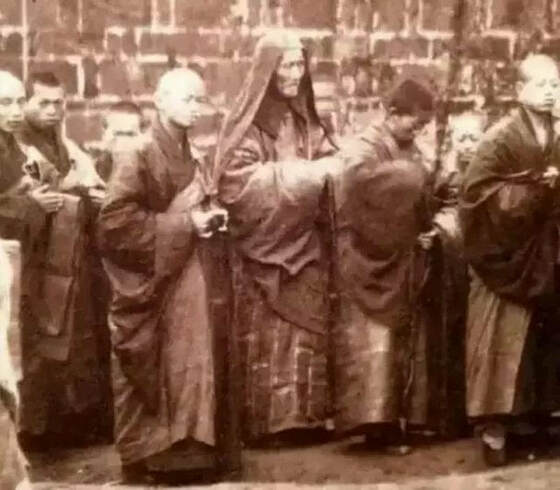
A disciple enquired: “What is a monk’s purpose?
Ch’an Master Xianglin replied: “In the 12th month, fire engulfs the mountain.”
Ch’an Master Xianglin Chengyuan (908-987CE)
Ch’an Master Xianglin replied: “In the 12th month, fire engulfs the mountain.”
Ch’an Master Xianglin Chengyuan (908-987CE)
The 12th month signifies the end of the lunar cycle and the beginning of a New Year – but before this happens a transitional point must be reached and traversed. For the Chinese Ch’an Buddhist monastic (male or female), it is the Vinaya Discipline which brings an end to ALL ‘burning’ desire – leaving the deep and surface mind free of ALL obstacles and hindrances. The mind is likened to a mountain cleared of all foliage by a raging fire, and once cleared there is nothing for the fire of desire to feast upon ever again! Of course, desire is likened to a fire by the Buddha which in the deluded state is constantly fed with the appropriate fuel of attachment to keep burning brightly and in so doing, obscure the empty mind ground. Adhering to the Vinaya Discipline is itself a manifestation of desire, but one defined by the Buddha as useful as it aims at transcending and ending all manifestations of greed, hatred and delusion. This type of desire can be likened to a fire that burns all the fuel that perpetuates greed, hatred and delusion, and which is aimed toward the objective of securing a calm and still mind. This is similar in the modern world to fire-fighters using carefully placed explosives designed to stop a forest fire from spreading further or in a particular direction. In the Ch’an sense, the desire to adhere to the Vinaya Discipline achieves the end of ALL human desire which justifies greed, hatred and delusion, and the dualistic view of the world. Attachment to sense objects and sense impressions will cease and the old way of viewing the world will come to an end (like a calendar which will never repeat). In this battle to uproot klesa (defilement) no stone is left unturned and no tree is left that is not uprooted (in the spiritual sense). Once this purified mountain is climbed, the monastic achieves a superior vision of reality. A mind which is ‘stilled’ allows for its depths to be perceived and its empty essence realised. The empty mind ground is the ‘rootless root’ – that is all. If a monk or nun wastes their time and does not engage in genuine self-cultivation, then surely when the mountain is engulfed in flames there will be no escape. Fire purifies through destroying and although a mountain can be transformed in its surface manifestation, its internal nature remains exactly the same. When the dualistic mind is transcended, then the monk, mountain and fire all arise, manifest and disappear within the empty mind ground which is an all-embracing and reflecting mirror (samadhi) mind. This is the realisation of the essence of perception and non-perception and the non-conditioned state of Nirvana…
Blessings and Good Fortune to Each and Everyone of You!
Mr Wang Ping (王平)
Secretary - ICBI (Beijing Office)
Mr Wang Ping (王平)
Secretary - ICBI (Beijing Office)
Progressive Supplementary Statement 02.09.18
I N T E R N A T I O N A L C H ‘ A N B U D D H I S M I N S T I T U T E
VIRTUE AND INTERACTION
Written By Mr Wang Ping (王平)
Translated by Adrian Chan-Wyles (PhD)
VIRTUE AND INTERACTION
Written By Mr Wang Ping (王平)
Translated by Adrian Chan-Wyles (PhD)
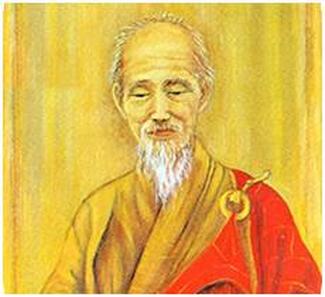
If we have the means to live in solitude to practice the Buddha-Dharma, then we are very lucky indeed! Of course, luck – If it exists at all – can vary in depth and strength. Great Master Xu Yun (1840-1959), when he possessed nothing in the wilderness other than his robe, thought he was blessed because he could sit upright (without distraction) and return all sensations to their unified and profoundly empty root. Yet, Old Master Xu Yun did not possess food or water in good or regular supply and had no access to others to request assistance in an emergency, or help with injuries or illnesses. Other than any medicinal herbs growing naturally around him, his isolation was very dangerous on the one hand, and very fortuitous on the other. Dangerous for the continuation of his physical life, and fortuitous as he had a very rare chance to break free of the tyranny of material existence. It is said that ‘virtue’ defines the opportunities we experience in life (which exist outside of the narrow confines of modern living). Virtue is an innate combination of good and wholesome thoughts and actions, integrated through interaction with the physical world and all beings contained therein. Whilst being humble and seeking the minimum for oneself (and the maximum for others), a certain sense of positive transcendence is cultivated that spreads through every cell of the body, through every thought and emotion, and out into the environment through good and positive behaviour. This process is purely spiritual in that although a physical body is required to follow the Buddha-Dharma, it is only through a ‘good intention’ in the mind that all behaviour changes and new (positive) thought patterns are generated that permanently replace the old habits (of thought and action). Indeed, although virtue is generated whilst living alone in the hills, it is only through interaction that virtue is revealed (naturally) and is known and experienced by others, and for their benefit. Virtue is developed by an individual but does not belong to any single person. We may generate virtue (a glowing and light-filled energy) that has a transformative effect on all it encounters, but for this to happen, all notions of selfishness must be abandoned. If we are limited in any way to an individual ego with all its worldly cares and petty concerns, then we can never generate the virtuous strength required to return the hearing to its non-hearing essence and escape the wheel of transformation. This is why Old Master Xu Yun was happy to live in a cowshed, as this was the best place for him to generate virtue, compassion and understanding until it became time to drop his body. All genuine Ch’an practitioners (during the three times and ten directions) must eternally learn from this.
Mr Wang Ping (王平) 2.9.2018
Secretary - ICBI (Beijing Office)
Mr Wang Ping (王平) 2.9.2018
Secretary - ICBI (Beijing Office)
Progressive Supplementary Statement 16.02.18
I N T E R N A T I O N A L C H ‘ A N B U D D H I S M I N S T I T U T E
YEAR OF THE EARTH DOG
YEAR OF THE EARTH DOG
Wishes All its Members & Supporters
A Very Happy Chinese New Year 2018 (4716)
(中国农历新年快乐 – 4716)
Compiled by Mr Wang Ping - ICBI Beijing Office
A Very Happy Chinese New Year 2018 (4716)
(中国农历新年快乐 – 4716)
Compiled by Mr Wang Ping - ICBI Beijing Office
OLD VENERABLE CHAN MASTER XU YUN [虚云老和尚] (1840-1959)
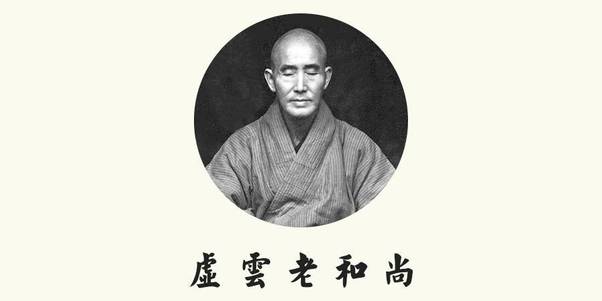
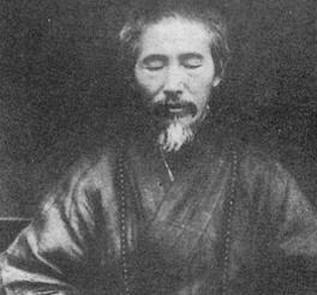
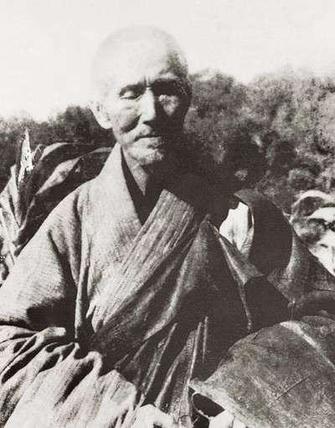
The last Year of the Earth Dog was in 1958. At this time, Master Xu Yun was in his 119th year of age. Throughout his long life (Xu Yun lived two cycles of the Chinese Lunar Calendar), he encountered pleasant, unpleasant and neutral situations. Life is not static even for those who live alone in the hills, or who live in busy temples. For lay people life can be very hectic with these three manifestations turning around and around every minute. For Buddhist monastics, depending upon their position in life, it is true that situations may be more tranquil, or at least avoid the more unpleasant manifestations of life, but even so, a Buddhist monastic living in the hills may never have enough to eat and suffer from the sun or the cold, etc, whilst a lay person might well experience a pleasant life surrounded by things that gratify the senses. Master Xu Yun always avoided reactionary responses and practised ‘indifference’ to all circumstances. He never fell into the trap of getting emotionally involved in taking sides within conditioned events, but always remained non-attached. When praised he ignored it, when criticised or falsely accused, he ignored it. Master Xu Yun certainly never courted praise, or tried to push criticism away. He was indifferent to conditioned events as they manifested and passed away. He always trod the middle path between the realised empty essence of phenomena, and the material manifestation of the empirical world. The physical world exists but is ‘empty’ of any permanent or unchanging essence. How many people can be like this today? If you are insulted, can you remain ‘indifferent’ and not identify with the insult? On the other hand, Master Xu Yun did not live in an internal fantasy world devoid of any connection with the external world. As is evident from his biography, he could take (or leave) positions of authority, and act with the most virtuous effectiveness in the world. This means that whilst being ‘detached’ from the world, he did not ‘reject’ the world, after-all, the material world is the place where the Buddha-Dharma is encountered, learned and put into practice. Just as in 1958 where Master Xu Yun aptly dealt with many serious issues in the world, 2018 should be a year for serious Ch’an study. The ICBI is a shining light designed to quietly help anyone in the world realise the empty mind ground here and now. Be strong in your practice and sit like an iron mountain!
Blessings and Good Fortune to Each and Everyone of You!
Mr Wang Ping (王平)
Secretary - ICBI (Beijing Office)
Blessings and Good Fortune to Each and Everyone of You!
Mr Wang Ping (王平)
Secretary - ICBI (Beijing Office)
Progressive Supplementary Statement 28.01.17
I N T E R N A T I O N A L C H ‘ A N B U D D H I S M I N S T I T U T E
YEAR OF THE FIRE ROOSTER
YEAR OF THE FIRE ROOSTER
Wishes All its Members & Supporters
A Very Happy Chinese New Year 2017 (4715)
(中国农历新年快乐 – 4715)
Compiled by Mr Wang Ping - ICBI Beijing Office
A Very Happy Chinese New Year 2017 (4715)
(中国农历新年快乐 – 4715)
Compiled by Mr Wang Ping - ICBI Beijing Office
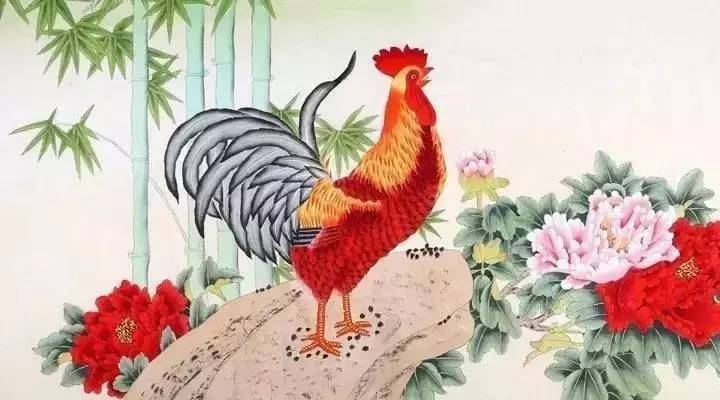
When Master Xu Yun (1840-1959) was in his 110th year of life – 1948-49 – he met with his lay-Buddhist disciple named Cen Xue Lu (岑學呂) [1882-1963] in the then British Colony of Hong Kong, and exchanged some very interesting words that every Ch’an student should remember and put into practice:
Cen Xue Lu: ‘The world is changing fast, where should I go (to maintain my practice)?
Master Xu Yun: ‘To a student of the Dao, his home is everywhere and if you only lay down everything, the place where you are is a Bodhimandala (place for realising the truth). Please set your mind at rest.’
Cen Xue Lu: ‘The monasteries will be greatly affected by what happens on the mainland (of China), why don’t you stay here temporarily to expound the Dharma for the benefit of living beings?’
Master Xu Yun: ‘There are others who can expound the Dharma here. It seems that I have a special responsibility (in the temples on the mainland). As for myself, my mind is beyond going or staying, but on the mainland, all the temples and monasteries are in a state of uncertainty. If I stay here, who will look after the tens of thousands of monks and nuns whose plight will worsen; how can my mind be set at rest (if I stay here) in Hong Kong? This is why I must return to the mainland.’
Master Xu Yun: ‘To a student of the Dao, his home is everywhere and if you only lay down everything, the place where you are is a Bodhimandala (place for realising the truth). Please set your mind at rest.’
Cen Xue Lu: ‘The monasteries will be greatly affected by what happens on the mainland (of China), why don’t you stay here temporarily to expound the Dharma for the benefit of living beings?’
Master Xu Yun: ‘There are others who can expound the Dharma here. It seems that I have a special responsibility (in the temples on the mainland). As for myself, my mind is beyond going or staying, but on the mainland, all the temples and monasteries are in a state of uncertainty. If I stay here, who will look after the tens of thousands of monks and nuns whose plight will worsen; how can my mind be set at rest (if I stay here) in Hong Kong? This is why I must return to the mainland.’
The Ch’an-Mind in its ‘empty-essence’ is beyond coming and going. The years come and go, but the empty mind ground remains exactly the same. Seek that which is unchanging in the centre of that which changes, and find ‘stillness’ in ‘movement’, and ‘movement’ in ‘stillness’. A rooster knows when to move and make a noise, and also when to remain still and silent, for the rooster it is all a matter of expert timing.
Blessings and Good Fortune to Each and Everyone of You!
Mr Wang Ping (王平)
Secretary - ICBI (Beijing Office)
Blessings and Good Fortune to Each and Everyone of You!
Mr Wang Ping (王平)
Secretary - ICBI (Beijing Office)
Progressive Supplementary Statement 08.02.16
I N T E R N A T I O N A L C H ‘ A N B U D D H I S M I N S T I T U T E
YEAR OF THE FIRE MONKEY
YEAR OF THE FIRE MONKEY
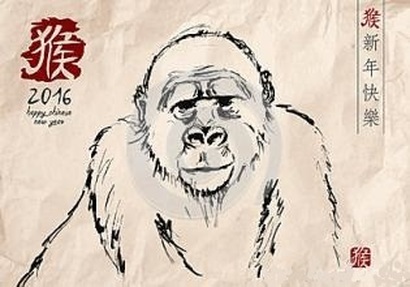
Wishes All Its Members a
Happy Chinese Lunar New Year – 2016 (4714)
(中国农历新年快乐 – 4714)
Compiled by Mr Wang Ping - ICBI Beijing Office
Happy Chinese Lunar New Year – 2016 (4714)
(中国农历新年快乐 – 4714)
Compiled by Mr Wang Ping - ICBI Beijing Office
The twelve animals of the Chinese Zodiac express a cyclic inter-play of the forces of Yin (negative) and Yang (positive). Each animal predominantly manifests one or the other of these two characteristics. Yin and Yang are simply two aspect of the same universal qi energy flow – sometimes the flow can be hotter (Yang) and at other times it can be cooler (Yin) – and every gradient that lies between these extremes. Of course, the ideal state is one of correct harmony between Yin (female) and Yang (male). However, the balance is forever shifting as the year unfolds and the days become warmer and brighter (Yang), before slowly shifting into becoming colder and darker (Yin) as the earth tilts toward and then away from the sun. The ability to set the calendar and correctly predict the seasons was important for all kings and emperors in ancient China because if the seasons were not properly regulated, the people did not know when to plant, grow or harvest the crops at the right time. Therefore the time of year has a certain qi energy flow associated with it that can be bright (Yang) or lacking in light (Yin) as in ‘shady’. As a consequence the fire monkey – as an example of intense Yang – is energetic, impetuous, and always taking risks. He or she is always active and taking on new and possibly dangerous undertakings. Although there is always the possibility that the fire will burn itself – the fire monkey is charming and honest in his restlessness and attracts many friends. The Empty Mind Ground of the Ch’an System correlates with the Wu Ji State of limitless emptiness that gives rise to all things (i.e. the State of Tai Ji). The State of Tai Ji is the Grand Ridgepole from which all qi energy flow emanates and transforms into Yin and Yang. Whereas the Wu Ji is the empty mind ground, the Tai Ji symbolises the thinking (moving) mind – both are inherently ‘empty’ – and it is this perfect integration of ‘void’ (Wu Ji) and ‘form’ (Tai Ji) that is the aim of Ch’an Buddhist practice. Do not become ensnared in the endless dance of externals, but strive to understand material objects as merely empty patterns of qi energy flow. Do not become attached to the void – but see the inherent emptiness as being able to contain all things. The myriad objects of material life must be correctly ordered and understood by the logical mind – but when this is accomplished, the logical mind must be penetrated through using precise wisdom and insight.
Progressive Supplementary Statement 26.06.15
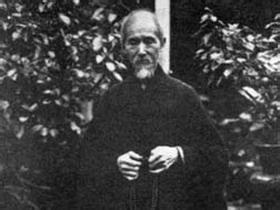
Dear ICBI Members
The Richard Hunn Association for Ch'an Study in the UK - which is a founding Member of the ICBI - provides important translation work for the transmission of authentic and accurate academic material about Chinese Buddhism to the West. Genuine knowledge of any subject requires access to reliable source documents. Recently, RHACs (UK) published an English translation of a Chinese language document (written by Great Ch'an Master Xu Yun 1840-1959) which explores Xu Yun's perspective on the subject of 'aDharmic' behaviour in modern times, or what might be interpreted as heretical ideas and practices applied to Buddhist self-cultivation:
Degeneration of the Sangha in the Dharma-ending Age
Why is this important? The Ch'an masters were very concerned about heretical ideas and practices, and these concerns can be clearly seen in the various records of Ch'an teachings. This concern evolves around the Buddhist theory of 'karma', or 'cause and effect', and is premised upon the idea that if the Buddha's message is misrepresented (either deliberately or unintentionally), the potential exists to mislead untold numbers of people into highly negative avenues of behaviour and lifestyle directions. This is even true of those who think that Ch'an masters are 'rebels' or somehow 'breaking' all the established rules of correct behaviour. Such ideas are common nowadays, but they are not correct and are not applicable to true Ch'an practice. Master Xu Yun clearly explains why ALL Ch'an Buddhists must adhere to the Buddhist discipline as either a monk or a lay person. Only when the Buddha's directions are followed correctly can the enlightened Ch'an master appear to be acting in unusual ways - but it must be understood that prior to enlightenment - there is no such thing as 'acting in unusual ways'. Those who think that the Buddhist Path does not need discipline, have already lost the battle and allowed their unenlightened ego to 'win'. The Ch'an master of old put a stop to this nonsense by advising their disciples to 'lay it all down'.
Gratitude in the Dharma!
Mr Wang Ping (王平)
Secretary - ICBI (Beijing Office)
The Richard Hunn Association for Ch'an Study in the UK - which is a founding Member of the ICBI - provides important translation work for the transmission of authentic and accurate academic material about Chinese Buddhism to the West. Genuine knowledge of any subject requires access to reliable source documents. Recently, RHACs (UK) published an English translation of a Chinese language document (written by Great Ch'an Master Xu Yun 1840-1959) which explores Xu Yun's perspective on the subject of 'aDharmic' behaviour in modern times, or what might be interpreted as heretical ideas and practices applied to Buddhist self-cultivation:
Degeneration of the Sangha in the Dharma-ending Age
Why is this important? The Ch'an masters were very concerned about heretical ideas and practices, and these concerns can be clearly seen in the various records of Ch'an teachings. This concern evolves around the Buddhist theory of 'karma', or 'cause and effect', and is premised upon the idea that if the Buddha's message is misrepresented (either deliberately or unintentionally), the potential exists to mislead untold numbers of people into highly negative avenues of behaviour and lifestyle directions. This is even true of those who think that Ch'an masters are 'rebels' or somehow 'breaking' all the established rules of correct behaviour. Such ideas are common nowadays, but they are not correct and are not applicable to true Ch'an practice. Master Xu Yun clearly explains why ALL Ch'an Buddhists must adhere to the Buddhist discipline as either a monk or a lay person. Only when the Buddha's directions are followed correctly can the enlightened Ch'an master appear to be acting in unusual ways - but it must be understood that prior to enlightenment - there is no such thing as 'acting in unusual ways'. Those who think that the Buddhist Path does not need discipline, have already lost the battle and allowed their unenlightened ego to 'win'. The Ch'an master of old put a stop to this nonsense by advising their disciples to 'lay it all down'.
Gratitude in the Dharma!
Mr Wang Ping (王平)
Secretary - ICBI (Beijing Office)
Progressive Supplementary Statement 08.02.15
I N T E R N A T I O
N A L C H ‘ A N B U D D H I S M I N S T I T U T E
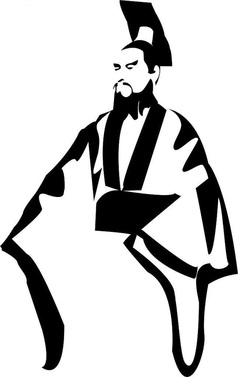
Yellow Emperor [黄帝] - 2698-2598
‘The three months of
the spring season bring about the revitalisation of all things in nature. It is the time of birth. This is when heaven and earth are
reborn. During this season it is
advisable to retire early. Arise early
also and go walking in order to absorb the fresh, invigorating energy. Since this is the season in which the
universal energy begins anew and rejuvenates, one should attempt to correspond to
it directly by being open and unsuppressed, both physically and emotionally.’
(Yellow Emperor – Internal Classic)
Wishes All Its Members a
Happy Chinese Lunar New Year – 2015 (4713)
(中国农历新年快乐 – 4713)
Compiled by Mr Wang Ping - ICBI Beijing Office
YEAR OF THE GOAT-SHEEP-RAM
(Yellow Emperor – Internal Classic)
Wishes All Its Members a
Happy Chinese Lunar New Year – 2015 (4713)
(中国农历新年快乐 – 4713)
Compiled by Mr Wang Ping - ICBI Beijing Office
YEAR OF THE GOAT-SHEEP-RAM
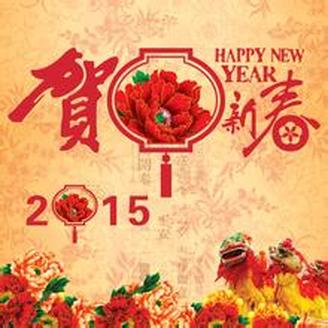
Chinese New Year 2015
Lion Dance & Lantern Poster
(中国2015 新年 舞狮 海报 灯笼)
(中国2015 新年 舞狮 海报 灯笼)
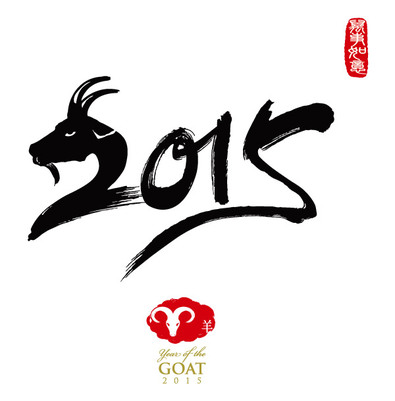
2015 Year of the Goat (2015羊年)
Ch’an Gong An for Consideration:
A monk asked Ch’an Master Deshan Yuanming (908-87):
‘Before the goat gets its horns, what is it?
Yuanming replied: ‘A rat-shit of a dog.’
The monk asked: ‘And after it gets its horns?’
Yuanming answered: ‘A rat-shit of a dog.’
Chinese Zodiac & Buddhism
The Yellow Emperor (Huangdi) ruled China for one hundred years (2698-2598 BCE) and is believed to be the single instigator of Chinese culture and cultural practices. He is credited with inventing or developing:
1) Agriculture.
2) Domesticating animals.
3) Chinese written characters.
4) Reading and writing.
5) Proper clothing.
6) Silk cultivation and weaving.
7) Dying clothing.
8) Astronomy.
9) Lunar calendar.
10) Code of laws.
11) Mathematics.
12) Football.
13) Bow and arrow.
14) Zither.
15) Chopsticks.
16) Medicine.
In the 61st year of his reign (2937 BCE), the Yellow Emperor developed the lunar calendar which measures the year through the phases of the moon. One full cycle of the Yellow Emperor’s calendar takes 60 years to complete. This is worked-out as 12 distinct years repeating in 5 cycles. A lunar year may have 12 (containing 353, 354 or 355 days) or 13 months (containing 383, 384 or 385 days), but over a period of time (say 60 years), the number of days in a year averages-out to around 365. Although each year is assigned a ‘Heavenly Stem’ and an ‘Earthly Branch’ to distinguish it from the other 11, legend says that one day the Buddha requested that all the animals came to see him before he passed away. The following animals arrived and as a reward, the Buddha decided that from then on, each year would carry the attributes of a particular animal, and those humans born in that year, would share these attributes:
a) Rat.
b) Ox.
c) Tiger.
d) Rabbit.
e) Dragon.
f) Snake.
g) Horse.
h) Goat.
i) Monkey.
k) Rooster.
j) Dog.
l) Boar.
However, as the Cat is independent, it turned-up late to see the Buddha, and so was ordered to share a year with the Rabbit. This is why those born in the year of the Rabbit can also claim to be born in the year of the Cat. During modern times, the Nationalist government (KMT) officially came to power on January the 1st, 1912 – and although the KMT adopted the Western Gregorian calendar, many people kept on using the lunar calendar to measure time and work-out dates. This all changed on October the 1st 1949 when Mao Zedong came to power and ordered that modern China should be brought into line with the modern West. This was when the Gregorian calendar was formerly adopted for official purposes, but today it works side by side with the ancient lunar calendar.
Mr Wang Ping (王平) - Secretary - ICBI CHINA OFFICE – BEIJING - Lay & Monastic Cooperative
(Email: [email protected])
May All Beings Attain Release!
Ch’an Gong An for Consideration:
A monk asked Ch’an Master Deshan Yuanming (908-87):
‘Before the goat gets its horns, what is it?
Yuanming replied: ‘A rat-shit of a dog.’
The monk asked: ‘And after it gets its horns?’
Yuanming answered: ‘A rat-shit of a dog.’
Chinese Zodiac & Buddhism
The Yellow Emperor (Huangdi) ruled China for one hundred years (2698-2598 BCE) and is believed to be the single instigator of Chinese culture and cultural practices. He is credited with inventing or developing:
1) Agriculture.
2) Domesticating animals.
3) Chinese written characters.
4) Reading and writing.
5) Proper clothing.
6) Silk cultivation and weaving.
7) Dying clothing.
8) Astronomy.
9) Lunar calendar.
10) Code of laws.
11) Mathematics.
12) Football.
13) Bow and arrow.
14) Zither.
15) Chopsticks.
16) Medicine.
In the 61st year of his reign (2937 BCE), the Yellow Emperor developed the lunar calendar which measures the year through the phases of the moon. One full cycle of the Yellow Emperor’s calendar takes 60 years to complete. This is worked-out as 12 distinct years repeating in 5 cycles. A lunar year may have 12 (containing 353, 354 or 355 days) or 13 months (containing 383, 384 or 385 days), but over a period of time (say 60 years), the number of days in a year averages-out to around 365. Although each year is assigned a ‘Heavenly Stem’ and an ‘Earthly Branch’ to distinguish it from the other 11, legend says that one day the Buddha requested that all the animals came to see him before he passed away. The following animals arrived and as a reward, the Buddha decided that from then on, each year would carry the attributes of a particular animal, and those humans born in that year, would share these attributes:
a) Rat.
b) Ox.
c) Tiger.
d) Rabbit.
e) Dragon.
f) Snake.
g) Horse.
h) Goat.
i) Monkey.
k) Rooster.
j) Dog.
l) Boar.
However, as the Cat is independent, it turned-up late to see the Buddha, and so was ordered to share a year with the Rabbit. This is why those born in the year of the Rabbit can also claim to be born in the year of the Cat. During modern times, the Nationalist government (KMT) officially came to power on January the 1st, 1912 – and although the KMT adopted the Western Gregorian calendar, many people kept on using the lunar calendar to measure time and work-out dates. This all changed on October the 1st 1949 when Mao Zedong came to power and ordered that modern China should be brought into line with the modern West. This was when the Gregorian calendar was formerly adopted for official purposes, but today it works side by side with the ancient lunar calendar.
Mr Wang Ping (王平) - Secretary - ICBI CHINA OFFICE – BEIJING - Lay & Monastic Cooperative
(Email: [email protected])
May All Beings Attain Release!
Progressive Supplementary Statement 24.1.14
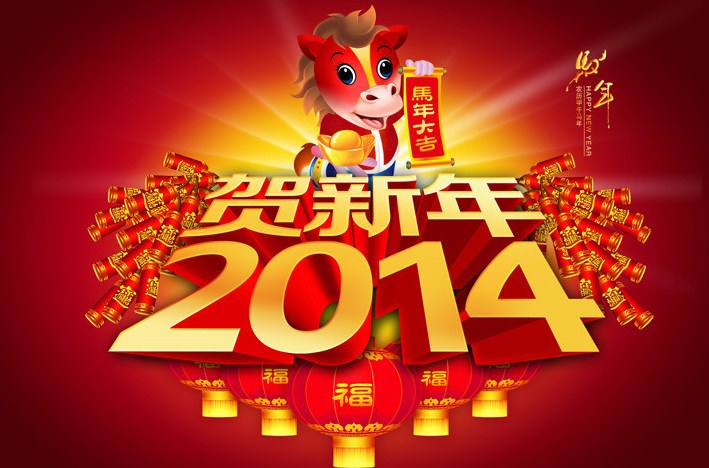
To all ICBI Members, families and friends, we wish you a Happy New Chinese Year of the Horse: 恭禧發財(Gōng Hè Xīn Xǐ)! 新年好 (Xīn Nián Hǎo)! The ICBI was born in the Year of the Snake and now enters the Year of the Horse – may great energy imbue all its activities!
The ICBI China Office (Beijing) hereby confirms that the ICBI UK (London) Office is to serve as the permanent administrative centre for the day to day running of the International Ch’an Buddhism Institute in all its duties, and that this acknowledgement is not limited to geographical boundary, political regime, or economic system. The ICBI is non-hierarchical in structure but acknowledges that those with knowledge (teachers) must teach those who wish to learn (students), and that this relationship is not static, but evolutionary and progressive. A new way of interacting can only be achieved through the practice of mutual respect.
The ICBI China Office (Beijing) acknowledges and respects all Buddhist lineages without exception. The True Mind can be expressed in many different and varied ways. This is why individuals encounter Ch’an and Zen in many different situations and through varying socio-economic conditions. This encountering of Ch’an and Zen will have a diverse meaning to those involved and this will cause differences in superficial understand and interpretation – just as a tree has many branches but a single trunk. For Ch’an and Zen to be strong, its roots must be planted far and wide in the world.
Although all beings belong to human groupings, it is through individual motivation and effort that a good practice is established and developed. Western practitioners are held in high regard in this respect, as it is understood that to establish a regular practice is a very difficult thing to achieve – this is exactly the same in modern China and in this respect no difference can be discerned. We must assist one another in mutual brotherhood and respect so that the Dharma is strongly supported and that society benefits as a result.
May All Beings Attain Release!
ICBI CHINA OFFICE – BEIJING
Lay & Monastic Cooperative
The ICBI China Office (Beijing) hereby confirms that the ICBI UK (London) Office is to serve as the permanent administrative centre for the day to day running of the International Ch’an Buddhism Institute in all its duties, and that this acknowledgement is not limited to geographical boundary, political regime, or economic system. The ICBI is non-hierarchical in structure but acknowledges that those with knowledge (teachers) must teach those who wish to learn (students), and that this relationship is not static, but evolutionary and progressive. A new way of interacting can only be achieved through the practice of mutual respect.
The ICBI China Office (Beijing) acknowledges and respects all Buddhist lineages without exception. The True Mind can be expressed in many different and varied ways. This is why individuals encounter Ch’an and Zen in many different situations and through varying socio-economic conditions. This encountering of Ch’an and Zen will have a diverse meaning to those involved and this will cause differences in superficial understand and interpretation – just as a tree has many branches but a single trunk. For Ch’an and Zen to be strong, its roots must be planted far and wide in the world.
Although all beings belong to human groupings, it is through individual motivation and effort that a good practice is established and developed. Western practitioners are held in high regard in this respect, as it is understood that to establish a regular practice is a very difficult thing to achieve – this is exactly the same in modern China and in this respect no difference can be discerned. We must assist one another in mutual brotherhood and respect so that the Dharma is strongly supported and that society benefits as a result.
May All Beings Attain Release!
ICBI CHINA OFFICE – BEIJING
Lay & Monastic Cooperative